EN
EN

Why proper sealing of envelope mailers is critical for content protection
With 23 years as a one-stop customized packaging manufacturer, we know that sealing an envelope mailer correctly is far more than just closing a package—it’s the final line of defense against content damage during transit. A poorly sealed envelope mailer can lead to accidental opening, moisture intrusion, or item shifting, all of which ruin products and harm brand reputation. The International Safe Transit Association (ISTA) confirms that 35% of transit damage related to flexible packaging stems from inadequate sealing, a statistic we’ve witnessed firsthand with countless clients. Our range of envelope mailers—including bubble mailers, poly mailers, and aluminum foil bubble mailers—are engineered with durable materials and reliable self-adhesive systems, holding ISO 9001 certification and trusted by global e-commerce and courier companies. We once partnered with a skincare brand that used our premium bubble envelope mailers but struggled with 10% of their products leaking or getting damaged; after reviewing their process, we found they were rushing the sealing step, leaving gaps for moisture and shifting. By following our proper sealing guidelines, their damage rate dropped to 0.8% within two months. This case proves that mastering envelope mailer sealing isn’t just a trivial step—it’s essential for protecting your products and keeping customers happy.
Choose the right envelope mailer type for effective sealing
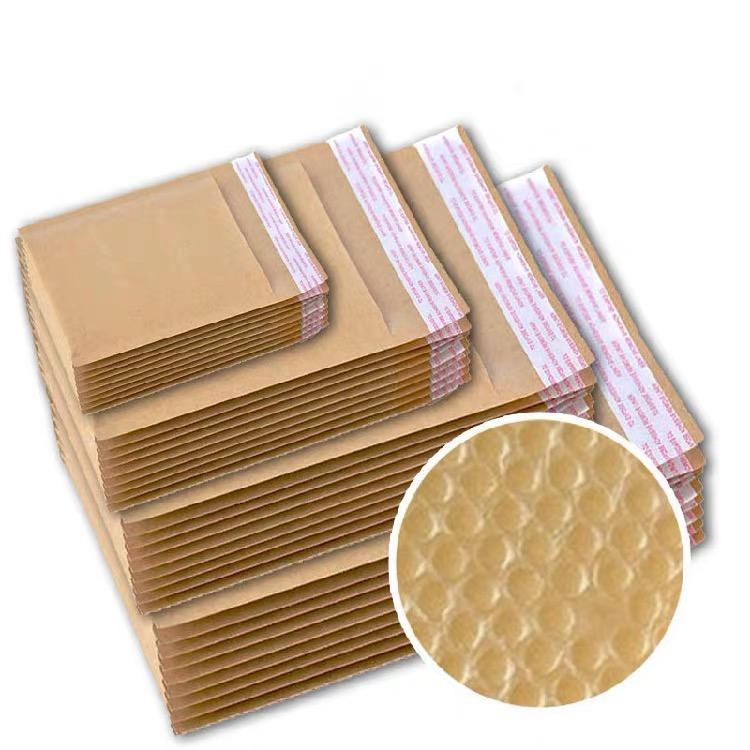
The first step to successful sealing starts with selecting the right envelope mailer, as not all types are designed for the same sealing needs—and our 23 years of experience help us match clients to the perfect option. For lightweight, non-fragile items like documents or clothing: our self-adhesive poly envelope mailers are ideal, featuring a strong peel-and-seal strip that creates a tight, moisture-proof seal with minimal effort. For fragile or delicate items like jewelry or small electronics: our bubble envelope mailers combine cushioning with a reinforced sealing flap, preventing the seal from splitting under the weight of internal padding. For temperature-sensitive or moisture-prone items like skincare or supplements: our aluminum foil bubble envelope mailers have a tamper-proof, waterproof seal that locks out humidity and maintains internal conditions. We offer custom-sized envelope mailers to ensure a snug fit—too much extra space means items shift and stress the seal, while overstuffing stretches the flap and compromises adhesion. A subscription box service that switched from generic envelope mailers to our custom-sized bubble variants reported a 25% reduction in seal failures, as the tailored fit eliminated excess movement and seal strain.
Prepare envelope mailers and contents for optimal sealing
Proper preparation of both the envelope mailer and its contents is key to a secure seal that lasts through transit—and our technical team has refined this process for every envelope mailer we produce. First, ensure the sealing flap and adhesive strip are clean and dry: dust, debris, or moisture on the adhesive will prevent proper bonding, so we advise wiping the flap with a dry cloth before sealing. Our envelope mailers use high-quality pressure-sensitive adhesive that works best on clean surfaces, a feature we’ve tested extensively in diverse shipping environments. Second, pack contents properly to avoid interfering with the seal: items should be positioned so they don’t press against the sealing flap, and sharp edges should be wrapped to prevent puncturing the envelope mailer from the inside. For irregularly shaped items, use our complementary cushioning products (like bubble film or air pillows) to fill gaps without crowding the seal area. Third, avoid overstuffing: an envelope mailer should close smoothly without stretching the material, as overstretching weakens the adhesive bond and the envelope’s structural integrity. We worked with a small business shipping handmade crafts; by adjusting their packing to avoid overstuffing and cleaning the adhesive strip before sealing, their envelope mailer seal failure rate dropped by 40%.
Master step-by-step sealing techniques for envelope mailers
Sealing an envelope mailer correctly is a simple process, but following the right techniques ensures maximum security—and these are the steps we teach all our clients for their envelope mailer use. First, align the contents evenly inside the envelope mailer, ensuring they’re flush with the bottom and sides (not bulging at the top near the seal). Second, peel the protective liner from the adhesive strip slowly and evenly—avoid tearing the liner, as leftover pieces can leave gaps in the seal. Third, press the sealing flap firmly along the entire length of the adhesive strip, starting from one end and working your way to the other to eliminate air bubbles. For extra security, run your finger or a flat tool (like a credit card) along the sealed edge to reinforce adhesion—our envelope mailers’ adhesive is designed to activate fully with firm, uniform pressure. For high-value or sensitive items, consider a double seal: fold the top flap over once, seal it, then fold a small portion of the flap over again and apply additional adhesive tape (we recommend our compatible tamper-evident tape for envelope mailers). A jewelry brand that adopted these techniques saw zero instances of lost or damaged items, as the secure seal prevented accidental opening and moisture intrusion during transit.
Quality checks and post-sealing best practices for envelope mailers
Even after sealing, a quick quality check and proper post-sealing practices ensure your envelope mailer stays secure—and these final steps are part of our comprehensive packaging guidance for envelope mailers. First, perform a seal test: gently pull on the sealed flap to check for adhesion—if it lifts easily, re-seal immediately, ensuring the adhesive strip is clean and pressure is applied evenly. Our envelope mailers undergo rigorous AQL quality inspections during production, but a final check before shipping adds an extra layer of protection. Second, label the envelope mailer correctly without covering the seal: labels or tape over the sealed edge can weaken the bond or cause the seal to split when peeled off. We design our envelope mailers with clear labeling areas to avoid this issue. Third, store sealed envelope mailers properly before shipping: keep them in a cool, dry place away from direct sunlight, as heat and moisture can degrade the adhesive over time. For bulk shipments, stack envelope mailers carefully to avoid crushing the sealed flaps—our durable envelope mailer materials can withstand reasonable stacking pressure, but excessive weight can compromise seals. A logistics company that implemented our post-sealing checks and storage practices reduced their envelope mailer-related damage claims by 30%, as minor seal issues were caught before shipping and proper storage preserved adhesive strength.